
We acknowledge the Traditional owners of country throughout Australia. We pay our respects to Elders past and present.
Quick Links
……
© Copyright 2025 · Innovate Media · All rights reserved. TERMS · AI POLICY · PRIVACY POLICY




Season 4, Episode 8
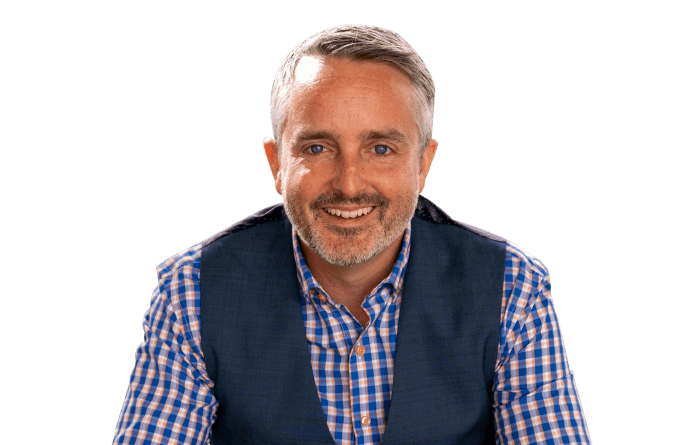
Brad shares his journey from nursing to entrepreneurship, the challenges of innovating in a conservative industry, dealing with entrepreneurial sacrifices and the importance of building a community of early adopters to champion emerging technologies. He emphasises the need for a shift in how medical education is delivered and the role of disruptive innovators in driving change within Australian healthcare systems.
00:00 The Power of Immersive Learning
05:59 Transforming Medical Education
12:02 Challenges in Healthcare Innovation
17:48 The Journey of a Startup Founder
24:02 Scaling Up: New Opportunities and Challenges
30:00 The Future of XR in Healthcare
36:02 Disruption and Institutional Inertia
41:12 Building a Community of Practice
Read Full Podcast Episode Transcript
G’day and welcome back to the Coast and Commerce podcast. I’m Ben Amos from Innovate Media and this is the podcast where we bring inspiring stories from the Sunshine Coast to help you in whatever you do in business here on the coast. And one of those inspiring stories that I first came across a number of years ago, doing some really cool stuff actually in the world of technology and startup and all sorts of cool stuff we’re going to dive into here today is Brad Chesham from Bundle of Rays. Brad, welcome to the show. How are we doing?
Welcome everyone. Thanks for having me. Yeah. Well, thanks for joining me. Like I kind of teased there, you do some interesting stuff and the name bundle of rays, you know, the name of your company. I think a lot of people immediately like, okay, I have no idea what you do. Bundle of ray of sunshine or. Right. It sounds very happy. We could probably start there. So I’m, I’m a nurse, been nursing for 20 years. When I graduated, I worked in cardiothoracics, which is heart long transplants essentially. So in Sydney, I looked after people who got mechanical hearts.
And there’s a few things in nursing that nurses need to learn. And it’s the heart monitoring, the ECG or the telemetry that you see on know, Grey’s Anatomy that they look at the monitor. And there’s one thing on there called a bundle branch. And that is how the electricity travels through the heart. And it’s something nurses struggle with. And it’s very spatial. And the other thing in cardiothoracics is chest X-rays. Nurses find it very difficult to analyse chest X-rays, although we look at them every single day. So there’s these two really difficult things that we try and learn.
Bundle Branch and Chest X-rays, and I was teaching them extensively. So Bundle of Rays is how I got the name. So when you started the company there, were you working in this technology space, you know, this AR and XR that we’re going to dive into today a little bit, or was it just in physical, just teaching in the old school methodologies? Yeah, I just worked as a nurse in intensive care at the end of the bed looking after patients. And it really started in England. I had a blog and I used to teach face-to-face classes with pen and paper.
Some of the concepts are really difficult to deconstruct. You you’re talking about things inside the body and there’s relationships geographically and electrically and trying to deconstruct that can be difficult to teach. So then I got into sort of, I worked as a lecturer, I’ve done a master’s, I’ve done research papers. And while I was in England, a few of my friends worked in art. They also worked for Amazon and sort of this weird design world. I read a lot of graphic novels.
And that’s how I sort of got into virtual reality originally, which is a range of technologies as extended reality, which is the most common term now that the industry seems to have settled on as XR as a descriptor. But it’s really a range from augmented reality, people might know as Pokemon Go, or if you use Google Map now, there’s a whole range of AR, and then to a complete digital simulated environment, which is VR. So long story, you one day,
put a headset on and there’s a heart there and I could walk inside the heart. Like the heart was one story tall. I could pull on the valves. I could see where the blood moved through. I could walk through the chambers of the heart and like it’s just straight away, well, that’s no brainer. Like I’ve learned my whole nursing career out of a textbook and here I am physically touching and surrounded contextually by the content that was otherwise words. And then the real kicker is that while I’m in there, anyone from around the world could join me in that environment.
could high five them. So this virtual classroom is untapped. So then I had to figure out being an intensive care nurse and then how to build a business. Yeah. So you mentioned that kind of, I guess, aha moment of walking into that heart, having that experience in that virtual reality or XR space there. was that the immediate foundation of your business? You’re like, I need to…
transition into this or was there a bit of a process of like working out what was possible or if you were even able to do that? Do you know what I’m saying? Yeah, yeah, 100%. I think immediately understood that from a sense of awe that this has a place for education. Then to take that into a business, like a lot of ideas, I just translated it from what I did and then tried to do what I traditionally have done. I tried to do that in virtual reality. So
I’m in a classroom, there’s 12 people, I put some headsets and I taught for six hours, but maybe 30 minutes in the morning and 30 minutes in the afternoon was using virtual reality to… But the truth is, know, first principles, I shouldn’t be just translating traditional into the real world. And we stepped back from that. Plus my wife, you know, she got the shits because I was traveling around teaching these courses all the time. So the business model when you’ve got babies at home of traveling to Melbourne and Darwin was, do we really need to do this in person? Because…
I can put a headset on in Sunshine Coast. Somebody in Uganda can put a headset on, but we’re standing next to each other, high five, and I can give them things and we can get post-it notes and draw. So then, this is probably three years ago, we just completely re-changed the business to essentially present the future of e-learning. So virtual education, but you’re not clicking and scrolling. You’re using your hands and walking around. So a tangible way to deliver vocational training.
I think anyone who’s had an experience in some sort of AR environment, headsets and goggles, that sort of thing, that moment of first really understanding the, having your eyes open to the possibilities here, even if it’s just a gaming kind of experience initially or some sort of experiential thing. I think everyone has had that moment if you’ve been in that situation where you’re like, okay, this is mind blowing in some way. Sometimes it’s a little bit unnerving, sometimes you get a bit dizzy and things like that.
I think everyone that I’ve spoken to has had that experience, has realised there’s something here and it’s the future of something, right? And you kind of had that, but then applied that into a real world use case that you’ve built a business around, right? And you said that was about three years ago? So I probably had the business about five years, but we sort of transformationally changed the business about three years ago, yeah. What were some of the early challenges? Because that was on the Sunshine Coast at that time, you were now on the coast.
and what was some of the early challenges of, guess you kind of disrupting in a way or trying to disrupt the traditional way that medical education was being delivered. You know, is it something that as soon as people whack on the headset and they try it, they’re like converted, they’re like, this is the way to do it. Or is there been some pushback or some challenges, some objections to that? I call healthcare concrete. Okay. It’s like bashing your head against the wall.
Well, as much as you might be a director at a hospital or a dean of a university, the truth is innovation in healthcare doesn’t happen easily and it’s not a corporate deal. I can’t just walk in and say, check out this. They go, wow, this is cool. Here, let’s train the staff. It just doesn’t happen like that from a procurement process. you know, government systems have checks and balances. Universities have checks and balances. All of them are very, very slow. So
You know, being a startup in my space with that client be the big sale, it’s concrete. You know, you really have to, you know, lot of the narrative I get from clients is what’s the evidence, you know, and that proof takes time. It’s there, right? And cyber sickness, you mentioned, and some of the barriers just make it easy for people to maintain institutional inertia. You know, like, yes, absolutely, I’m disrupting.
Like the simulation market, for example, there’s mannequins, there’s a whole range of simulation methodologies, and these new technologies just require a headset and a bit of Wi-Fi. So there’s a dramatic reduction in cost and accessibility, but they haven’t just overtaken the market. that’s fair enough, because we’re not going to replace the gold standard. But the pace at which that happens and how health care manages risk is concrete. The risk management.
Because I bang on about this all the time. did an innovation fellowship with the Ohio State University in the US, which is one of our customers, and we do projects with them. They’re in the top five nursing schools in America. And in that fellowship, we really explored what is innovation in healthcare. And the truth is, it’s really hard to understand. People love talking about it. It’s a little bit like accelerator programs. People will advertise accelerator programs, but what they never advertise.
is the KPIs 12 months after that accelerator program is finished and what those companies are then doing. Because if there’s investment in innovation, that’s good. We can talk about it. But what is the actual real world impact of innovation? Because I hate the word innovation. Change management or disruption or growth or something like that is good. But innovation just gets a title of ideas rather than actions. And it’s the actions in an industry like health care that they really care about.
You know, we can have these big government systems that have innovation programs. What does that mean? You know, what does that mean for the nurse that’s on the ward and the respiratory ward at 10 o’clock at night? How does that touch her on the shoulder and change her professional life? That’s what I love digging into. That’s sort of our core business of how do we help Jenny, this nurse, have a better job, be more satisfied, want to go to work and help her patients? Because if she does that, well then the healthcare system just gets transformed.
Well, what you’ve kind of touched on there is something that’s come up quite a bit on this podcast, particularly in the later season, in season four, where we’ve talked a lot about innovation on the coast and the Sunshine Coast is potentially being this hub of innovation and startup ecosystems and things like that. But in my experience, know, in startups is it’s not just about the big idea. Often it’s kind of thought about as like just have a big idea, a disruptive idea, an idea that like, you know,
has potential to take over the world, right? Which potentially AR and XR and VR in health education is a big idea, you know, that there’s a lot of potential there. But the reality of startup is often in the execution, right? That’s where the rubber hits the road or the real struggles happen. So can you talk us through some of that? Like you have the big idea. What’s been the journey over the last few years of actually getting that idea executed in a way that builds a sustainable business?
Yeah. The innovation of using an immersive environment to teach a nurse something is awesome. Yeah. It’s the business model that’s the real innovation of how do you do this? 29 million nurses in the world. There’s 400,000 registered nurses in Australia. How does that idea impact Jenny at 11 o’clock at night on a Friday to make her better? How does that, how do I sell this product to Queensland health or New South Wales health and how do then they incorporate it? How do they deploy it?
So the business model, the innovation of, let’s have a subscription model. you know, that is the real innovation. That’s what I feel like I’ve done five MBAs being a startup founder. Like I hate the concept of startups and the, the industry it’s, it’s the education that goes into and the sweat, the tears, you know, the, fights with my wife, the time away from my children of how do you mold this? So you can work with government, which isn’t always easy.
The workflows can be challenging and then scale that. That’s the real innovation for sure. And there’s mentors which have been amazing. There’s a lot on the coast. I have to give a big shout out to Ron Hill. He’s been incredible for me personally and professionally. And that’s one good thing about the coast is there are people sitting around the Sunshine Coast that give their time to help people like me and small businesses, which is very admirable.
because without those snippets of informational guidance or advice, know, in the dark times of sales dropping out and thinking, stuff this, I’m just gonna, it’s a good idea, but you know, it’s not gonna happen, is you need the persistence and the grit to drive it forward and sort of, you do, you have to sacrifice. My sacrifice has been my health, you know, just working nonstop, you know, it’s better to be obsessed with work than alcohol, right? But.
Being able to be away from, you know, I lived in Korea for four months for God’s sake. So I just was on an accelerator program there. There was 3000 applicants. We got in the top 50. So I got paid to go and live in Seoul for four months. And we ended up coming sixth out of 3000 companies, which was amazing. But I had a two year old kid at home that I was going to chase this and you know, so that balance of working out where the opportunity, where the real opportunity is and not just chasing every opportunity.
and having the space usually comes down to raising some money and having that. And we haven’t done that. We have done some pre-seed money, but we haven’t sort of jumped into any big investment yet. We are currently under due diligence going through an investment round, but we’ve been very cautious in the timing of our technology. So AI is obviously rampant and it’s got the trend, but people still don’t understand the use cases. know, most people think AI is chat GPT.
So just understanding the deepness to these business models, not the products, is where we really want to sit. So to get to the crux of your question is the mental health balance of work-life relationships, like friends. I don’t see my friends a lot. They’re amazing. They call me, check in on me. Hey, how’s your thing going? Good, great. Talk to you soon. Then the innovation of the business model and then the mobilization of the sales is
is the real thing that I’ve learned as a nurse. You needed to go to the toilet, Ben, I can help you out. I’ve done that a thousand times. If you had a cardiac arrest, I wouldn’t even be that stressed about it. But sitting down trying to write up a contract for half a million dollar deal, that’s what I’ve learned. Yeah. So I’m interested to explore that further because there are a lot of businesses on the coast, whether they consider themselves a startup or an early stage business or…
you know, trying to get an idea off the ground. And I think you do tend to throw yourself, particularly when you’re passionate about an idea and you feel that there’s something here, you tend to throw yourself at it, right? And sometimes throw more than you have at it. Financially, know, health, you know, mentally, all of that sort of stuff, right? What would you say, if you were to think back to Brad three, four, five years ago, if you were to mentor yourself now, what would you be saying to that?
that Brad’s starting out, would you say, don’t do it? Or would you say something else? No, I definitely wouldn’t say don’t do it. Focus is a big thing. Focus until it’s done. Chasing opportunities in the startup of just getting sales. We’ve really matured. I’ve hired staff now who are full-time sales. So I need to earn money. So get people to earn money for you. Give me a bit of space to then do.
The focus after five years is good where we’ve got a lineup, a pipeline of sales and the CRM is filled out. We know exactly month to month where we want to go. And, you know, we’re a team of one or three for the first four years. you know, we sort of zero to a million dollars revenue and then to go from a million to 10 million of what that looks like is giving the right attention to the person or project at the right time.
you know, that’s kind of like, hey, good advice, Brad, what the hell does that mean? But I would just follow your gut to try and stay to your core business and just drive that every day of the week rather than jumping over to do something just because it’s 10 grand and get a bit of cash in the bank. Yeah, and you touched on mental health and work-life balance and balancing family and business and all of that there as well. How would you, how would you mentor yourself in that way? Is there, is there balance?
Is there something to be found there? a bit of bullshit, isn’t it? You balance. What does, I don’t even know what that means. What am I going to do? I meditate every day. I try and exercise. I think in everybody’s different, we’ve got different personality traits. There’s no balance if, know, my, my, goal that I’ve set for myself is to have a global business and to do that in a three to five year trajectory. How am going to have a balanced life if I’m not?
out knocking on doors and talking to executives and deans and vice chancellors. I can’t have balance. And unless I have some generational wealth where I’ve got a quarter of a million in the bank that gives me the breathing space to get that balance and drive the business, then my dad grew up in a coal mine and we had no cash. And I think me and my eldest brother, two of the only, have gone to university out of our family. So it’s not like I’ve got that breathing space.
So the advice I’d give, you know, just surround yourself with people that care for you. I think that’s probably the biggest thing is, you know, my wife is far and away the stalwart of my mental health. Literally, she’ll just, Brad, sort yourself out. You know, this month you’ve done too much. And then my mates, my family, so it’s making sure you’ve got people to check in on you. So there’s two narratives here.
You sit in a cave and you toil away with ideas, but if you step back immediately, well, the cave is dark and negative. Why are you not on a rocket naked going through space being happy? So like the frame of mind of how you approach the task is just so, so critical. think one of my heroes is Ernest Shackleton, know, the Antarctic explorer. And if you read his journals, you know, they crash on the ice and they get off and play soccer. You know, they don’t sit there and cry about how they’re stuck in Antarctica.
a hundred years ago. So like how you approach these and the frame that you picture yourself is so critical to making sure that that persistence and the grit maintain. Yeah. Thank you for that. I think that’s really, really helpful for anyone. The, I want to kind of transition now and talk about, you know, your own journey of, you know, both we’ve talked about that startup phase, but I think, you know, before we hit record, you’re kind of on that verge of that.
scale up phase, I guess you’d call it now in that business growth trajectory. So, you know, what’s, what’s the new challenges? So you’ve kind of talked about some of the startup challenges. So now as you maybe paint a picture first about like what scale up looks like potentially for you, like where is the business and where are you taking it? And what are some of the new challenges that have come up now? Easy to paint from our perspective is the size of our customers. So being B2B enterprise, you know, we were doing
10 to $20,000 deals over two or three months. Now, you know, on the table on our pipeline at the moment, there’s multiple million dollar deals or half million dollar deals, but they close a lot longer. So cashflow has actually gotten harder, even though we’re earning more because of the instability of the regular smaller deal. So that’s why we hired the head of sales to keep things ticking over. So that’s one of the challenges is just the, the pipeline of the size of the contracts. So, you know,
managing that. Outside of that is the, you know, just logistical things. Having meetings in the US at four in the morning, just because of the time zones, because of the projects over there. And then in the evening in the UK, you know, you’re up till 10. So just stuff like that, that you probably don’t factor in. Someone, you have a meeting and think, great, we’ve got a deal, it’s in the UK. Then all of a sudden you’re up late, you’re up early. You know, that can drain you until you get the more resourcing for more staff. And so.
That’s a juggle and a scale up to start up of identifying the resourcing and infrastructure to support the sales pipeline as it month to month lines up. That’s been a new learning curve of how to manage that. Because it’s exciting, but at the same time you have nothing until they sign these contracts. So setting that up and then positioning that for the growth has been a really good learning opportunity. So you’re based, your company’s now expanded into a few different.
countries and regions in the world. So you’re still based here on the Sunshine Coast. assume occasionally you need to travel and so forth. But can you give us a picture of what that looks like? So Bundle of Rays, no longer just a startup here on the sunny coast. What does it look like today? Yeah, so I live up in Budroom. I work from home mostly, but we literally are scouting out offices at the moment. So we’re working with the Sunshine Coast Council. We’re doing their testing tech and paradise program. So I’m literally working out of town hall at the moment in partnership with the council.
So we’re looking at our growth locally. I’ve got staff in and around the coast, but also Melbourne and whatnot. We’ve got consultants globally, product, our head of learnings in Canada. we’ve got a global team. we do see, I did a tour of Afghanistan. I’ve worked in Mosul, Iraq. During the ISIS, I’ve worked in Mexico, Norway, Africa. I’ve traveled a lot in my life. And the Sunshine Coast, it’s got a lot to give. I live near the rainforest.
it’s what 10 minutes to the beach, it’s an hour to an international airport, 15 minutes to a domestic airport. It’s got all this digital infrastructure, Wi-Fi 6, everything that’s coming in. So, you know, it’s from a scale up perspective, access is pretty amazing. So I don’t see us living here in the short term, which is good. Are there any challenges or maybe things that you’d like to see?
come to the Sunshine Coast or to happen on the Sunshine Coast to better support businesses, whether they be at startup or scale up levels? Yeah, it’s an interesting one. There’s a lot of people doing a lot of good work and building communities is always hard, but the growth is here on the coast and you know, the next DC submarine cable and Google having an office and you know, I think you had CJ and Forward Fest and the council’s trying to build a $20 million hub and there’s all this thing.
It’s going on. But again, if I started a business next week, what does that mean for them? It’s a little bit like Jenny on the ward, right? How does that touch them on the shoulder? The last thing they need is an accelerator program for six weeks that doesn’t have outcomes for them, because it’s just wasted their time. They should just be focused on sales. So the measurable KPI of innovation of what does this actually achieve? And that’s why someone like Ron Hill, and I think you had Colin Graham on here as well.
I did a little program with them and if there’s one thing that Ron is pretty passionate about is seeing actionable things occur, which I have definitely learnt from him. So to answer your question, I think there’s a lot of good people here. There’s a lot of good ideas towards programs and I think the growth will come, but tying that in for startups and founders that brings them real world growth, which is hard. There’s a lot of different industries.
That’s what I’d love to see. And again, if I get into a position, I’d love to be able to turn that in. Like the nursing sector is just absolutely.
to too opinionated about this, but. You can be, it’s a safe space. Yeah, it’s a safe space. Nursing, innovation in nursing is just, it just doesn’t happen. know, Jenny on the ward just works overtime and she’s tired and there’s burnout and you know, and the mobilization of ideas just gets stopped every left, right and center. So I’d love to be able to have some kind of entrepreneurship program within nursing. Like currently I’m trying to organize a think tank around artificial intelligence. So.
The truth is that the professional body in nursing is Australian Nursing College and they put out a position statement on artificial intelligence last year. And you just sort of look at that and you go, you don’t use any AI at all in your business. So it’s just a regulatory kind of position. And when you look around the nursing industry, there’s no test beds, there’s no pilots, there’s no testing of innovation. What does that happen? How does that happen? And that’s something I think is just absolutely right.
for very smart nurses who are very committed to change and benefits to their patients to be able to put their ideas into some kind of platform that impacts the industry where government, academia and industry work together to make change. Now there’s a lot of internal activities within Queensland Health, but it’s so hard for industry to be involved. They just see us as a vendor trying to sell something when really some of the products we have could transform their business.
Those relationships and those kind of, hey, again, entrepreneurial, I hate that kind of word, but it’s mobilizing the ideas with actionable projects that could benefit industry. I’d love to see that in nursing. And I’d love to see nursing leadership do that. But at present, it’s like being in the desert, looking at the sand dunes of activity around technology in particular. So it’s fascinating. Yeah.
It’s a bit of a buzzword, I think in business and the startup ecosystem of disruption or those disruptors, Being those crazy ones on the fringe that are trying to make a difference in a certain space. In a way, you’re kind of playing that role in Bundle of Rays. Why do you say that that’s important? I’m assuming you think that’s important. Why?
Why is it important that there are these disruptors in industries, whether it be health, nursing, or anything in other industries as well? What role do those people who are, guess, brave enough to step up, step out, and try and change the status quo, why is that important? Oh, I’m going to be opinionated here Of course you can. That’s why I asked you the questions. Academia drives change in healthcare predominantly, evidence-based. What’s the research say? Well, the truth is these academics, they work nine to five, they get paid pretty good, there’s no risk.
for them. And you could do a PhD in virtual reality and have never worn a headset because they’re just researchers. So the disruption from my angle is I’ve been an academic. I’ve worked as an academic. And I contextually and entirely put my neck out because I quit my job and I started a business to try and prove the innovation.
academics would never do that. And that disruption…
sometimes the frustrations I get is that they don’t recognize the level of risk that I’ve taken to try and prove these ideas to better the industry. And it’s not probably them personally, it’s the academic industry saying, no, that’s not going to happen. It’s like, well, hang on a minute, you’re not going to do it. These people out here are doing it. Yeah, they might be commercial and they’re trying to sell, but what they’re selling is transformational for the industry. And they can measure it and all of that. how industry and academia work together.
And then of course you’ve got like Queensland Health and New South Wales, big government systems, procurement programs, know, like that’s the concrete, right? How do you get into the concrete? So if you’re not kicking sand up at people, you know, I said the words before, institutional inertia, people were just gonna keep cruising through and then the level of followership in healthcare is huge. So there’ll be some doctors who do something and they’ll talk at some conference and people go, you know, this person, we should adopt that program. Well, why I…
Where are the adopters? Why are we looking for just key figures? And I think if we could drive more adopters and more testers, that’s what I’m trying to champion, is that disruption of saying, what’s the risk in giving some things a go? Yeah, so I think why disrupt? It’s to stop the institutional inertia. I could be in simulation centers talking about extended reality simulation. It’s a $500 headset with maybe,
say $50,000 worth of software. And I’ll have someone look me in the eye and go, it’s pretty expensive, man. But we’re standing in a multimillion dollar sim center with mannequins that cost $200,000. And it’s like this fog of like, do you not see this? know, like this is the status quo. And yes, what we’re doing here doesn’t entirely replicate this. But if you’ve reduced that footprint by 30 % and adopted some of this, you’d be saving millions of scale.
So that’s the thing. think institutional inertia is the real thing in healthcare and academia that I just want to put my hand up and stop and say, come on, let’s have a bit of a look around. Yeah. One of the things you said there I’m going to hook into is you talked about bringing those adopters on board or the importance of those adopters when you’re disrupting. And I think you kind of painted that picture really well in your particular story of without those
you potentially don’t get traction in your disruption, right? And I think, you know, that’s potentially something that others can take away who are trying to disrupt in wherever they are, or whatever industry they are, is seeking out and building relationships with those adopters, those people who kind of, you know, want to come on that journey and see what you’re doing and can be those, that conduit into the bigger system, right? Would you say that that’s been some of your secret is trying to get…
some of those adopters on your bus? don’t know if bus is the right term, but you know. Yeah, well champions of the ideas, yeah. they might not always entirely love the products either, but they know that it adds benefits to the current status quo. if you look at rural and remote medicine, virtual reality isn’t a magic bullet.
But at the moment, you’ve got some nursing educators that are driving two or two and a half hours to a hospital to train three people and then staying in a hotel and then driving back. And when you have a look at the logistics of what goes on out in rural and remote, there’s huge costs. and ultimately it’s just getting people in front of each other and equipment. And you just sort of think, well, there has to be better solutions. And not only that, they lack staff, know, people left, right and center, you know, stay for six months and then leave again. So it’s just sort of.
vicious cycle out west of how to maintain consistency and equitable quality to metro areas. yeah, that’s the champions out there can see the benefits. And yeah, we also try and get a, you know, we’re talking about building a community of practice now of these adopters to sort of help build the use cases and the ideas to, cause healthcare just see us as a vendor set like a hawker in a, buy my shit, you know.
Whereas if we have a community of practice of nurses and academics saying, you know, we use this and we found this to be good and we found that to be bad. It helps to mitigate that feeling that I’m hawking some product into the industry. Cause that’s sort of how healthcare sees sales. Yeah. I like that. That’s good. Let’s just as we start to wrap up here, Brad, I’m interested in your kind of bigger picture view of this technology that you’re deep into of XR and AR and I guess VR as well, right?
and it probably works in AI as well, all of these acronyms. Where’s this going? So I know the technology has been a thing for a while now. It’s becoming something that’s being more adopted. Like you say, AI much more widely adopted, but XR, VR technologies are becoming more adopted slowly. Where’s this going though? Let’s say in the next five years, do you see this as being like…
everywhere and kind of ubiquitous or is it further down the field down the track than that or where’s the industry going? Fundamental change like true core industry change and AI really is the driver for that. So the two buckets here that’s extended realities, AR, VR, mixed reality, whatever. That’s, that’s the context, right? Context AI is the work that you can do. So you put a headset on, you go to a place and you have context.
and then the AI will be there getting the work done. So the easy example for an industry like nursing is very vocational. So you do a three year nursing degree, you might have 140 core skills, do a blood pressure, use a stethoscope. The truth is today, today, you can talk to an avatar and have a conversation. And yeah, good morning, sir, how are you? you got a bit of chest pain, okay. It can give you a sentiment score today of your communication skills.
And that’s the AI. That’s the AI. But you’re talking to a photorealistic person. And when you look around, you’re in a hospital. So that’s the XR component. That can happen today. The other thing that can happen today is retinal tracking and biometric sensing. So it’s expensive at the moment, but you look around and it will know how often you’ve looked at the patient. Did you look at the blood pressure calf? And did you look at the monitor? So there’s an absolute array of objective data points in these environment. Hand positioning, head positioning, et cetera.
So in five years, I see nursing as when you graduate from your degree, you’ll have a wallet of your skills. And those skills will be objectively scored at graduation for when you go for a job interview. So Queensland Health would say, all right, there’s a thousand new graduates that are coming to our work. Let’s look at their digital wallets and we’ll say they scored 70 on physical assessment.
and it’s just completely objective because it’s did they put their hand in the right spot? Did they translate the data? So from a skills perspective, it’ll just… Yeah, that’s game changing. It’s the same as being an electrician. Like you need to do a fuse box or like it’ll transform all forms of education that are vocational because the skills will be wrapped up. And the context here is that aviation have done this for 20 years. Like if you’re a check captain training pilots, they do a simulator.
They do it in the rain, they do it in the wind, and what do they do? They get a score. And they have to do that every year for proficiency. just that now the technology’s moved along so much, we can do it for nursing and doctors and electricians and plumbers. So I think it’s transformational change. Like imagine being able to practice conversation to a patient that’s been palliative and they’re dying, and you have to talk to them about their death and what they need. You can’t really practice that. Well, now you can.
Yeah, you can now. So we have photorealistic avatars with AI that we can build and have that conversation when you’re in a palliative care environment. if we can do that today, what’s the tech going to be able to do in five years around those kind of skills? So some people call them soft skills, but probably better to be communication or behavior type training. So if you have them and hard skills, like practical, and you match them together with the dashboard of scores, to me that’s
completely and utterly changes the industry. Yeah, there’s no doubt. To me, like what came up straight away there is it’s kind of like the dilemma with self-driving vehicles, right? Where the technology exists, but what potentially is holding it back from mass adoption is the legislation and the institutional kind of roadblocks, you know, which is the case with like self-driving cars, I feel anyway, you know. But I assume with some of these…
developments in technology, a lot of the technology already exists in education for healthcare. But the challenges you’ve mentioned is on getting the institutions to, I guess, accept it or allow that to be the accepted method of training, do you think? This is even some of the strangest part of it is that I’ll talk to national universities and CEOs of healthcare systems and they won’t even put the headset on. So you sort of like…
fundamentally how we’re going to change the industry with technology if if leaders within the industry don’t deep dive extensively into what it is and how it works and you know driving the use cases there so it’s up to people like me to keep kicking sand around the sandpit saying hey guys should look over here yeah yeah so that’s the some of the challenges so yeah
Yeah, it’s changing the perception, isn’t it? Like there is, I think, and we talked about this before we hit record here, that some of the perception for, you know, those who are slower to adopt technologies, if they have worn a headset in some way, they feel that it’s a game or it’s cartoony or it’s not really got that practical real world application. But that’s not the case. Like I think, you know, that’s digging, digging your head in the sand, you know.
It was probably just not being aware of the use cases, right? Like you can put a headset on and sit on a roller coaster. know, you can do that. But you can also put a headset on and save a soldier in a military conflict and put in a chest drain. So like just getting their heads in headsets to see the possibilities is tricky. But we’ll get there. We’re slowly, you know, I haven’t gone bankrupt yet. And we’ve got a pretty good little growth pathway for 2025 on the horizon.
You know, as challenging as cash flow and staff and the pains of scale up come, we see an extremely positive view towards what we can do. And, you know, we’re working with some low middle income countries now. We’ve got Sri Lanka, we’ve got some sales in Mexico and India. You we’ve got our office in Korea. So I’ll be damned if I ever thought that I started my nursing degree and I’d be running a global business. Like, it’s wild. That’s some wild shit right there, Ben. Well, well done.
It’s a hell of a story and I think a really good story that those of us in business on the Sunshine Coast, we should be following along. you know, I do encourage people who are watching or listening and interested to see what you guys are doing to kind of follow Bundle of Rays and connect with you. So what’s the best place? Like, you share content? Do you share the story out there so others can kind of come on that journey with you? Yeah, wish I was better at that. My LinkedIn is where I usually go to. You know, we’ve got a lot of our user base there. Facebook and Instagram.
do some stuff there. yeah, LinkedIn, I’m quite active. I’m literally trying to organize an event on the Sunshine Coast in July, August, which is a think tank for the nursing industry. we’ve had an event here in the past called Explore. So it’s kind of a secondary brand that we have around innovation. So if we have some events, it’d be great to see some other startups in the region come and they can pitch their products and their services at these sort of innovation events that we do. But yeah, otherwise on LinkedIn and I do.
like a wine and a beer down at Alex Surf Club, like, you I’m pretty approachable. So if people just want to hang out and have chat, that’s, well, it depends if my wife gives me the time off, but I’m around. Yeah, awesome, Brad. Well, I look forward to, you know, other people who have listened or enjoyed this episode to connecting with you and collaborating and being part of that community that’s kind of lifting up what you’re doing, a bundle of rays and, and in return, you know, growing what they’re doing on the coast as well. Right. I think, you know, everything’s better when we work together.
Yeah, 100%. Yeah. And, I think I’d love to be able to work with other companies to see them grow. It’s, it’s hard, but it’s, yeah, it’s pretty rewarding to see what you can do. Well, thanks for joining me on the show, Brad. I’m really excited to kind of see where you go through 2025 and beyond taking over the world. Hopefully not in the cave, hopefully on the rocket. see what happens. Yeah, let’s see it. All right. And for you guys watching and listening, hit subscribe so you don’t miss another episode of the Coast and Commerce podcast. Connect with Brad.
Chesham on LinkedIn, it’s probably the best place as he said. And let us know what you thought of this episode. Leave a comment below if you’re watching on YouTube or reach out to us at Innovate Media and let us know what value you’re getting from this podcast. Take care, we’ll see you in the next episode. Bye.
30 minute FREE zoom meeting
Discuss your needs & aims
Scope details for your customised quote
 https://innovatemedia.com.au/wp-content/uploads/2025/10/FWD25-08-Youtube.jpg
720
1280
Luanne Q
https://innovatemedia.com.au/wp-content/uploads/2021/12/innovate_media_logo-black.png
Luanne Q2025-10-20 23:50:532026-01-06 14:04:43A Step-by-Step Guide for Business Founders
https://innovatemedia.com.au/wp-content/uploads/2025/10/FWD25-08-Youtube.jpg
720
1280
Luanne Q
https://innovatemedia.com.au/wp-content/uploads/2021/12/innovate_media_logo-black.png
Luanne Q2025-10-20 23:50:532026-01-06 14:04:43A Step-by-Step Guide for Business Founders https://innovatemedia.com.au/wp-content/uploads/2025/10/FWD25-07-Youtube.jpg
720
1280
Luanne Q
https://innovatemedia.com.au/wp-content/uploads/2021/12/innovate_media_logo-black.png
Luanne Q2025-10-13 23:50:162025-12-04 10:45:37The Tech-Enabled Future of Health & Wellness
https://innovatemedia.com.au/wp-content/uploads/2025/10/FWD25-07-Youtube.jpg
720
1280
Luanne Q
https://innovatemedia.com.au/wp-content/uploads/2021/12/innovate_media_logo-black.png
Luanne Q2025-10-13 23:50:162025-12-04 10:45:37The Tech-Enabled Future of Health & Wellness https://innovatemedia.com.au/wp-content/uploads/2025/10/FWD25-06-Youtube.jpg
720
1280
Luanne Q
https://innovatemedia.com.au/wp-content/uploads/2021/12/innovate_media_logo-black.png
Luanne Q2025-10-06 23:50:002025-10-13 13:49:17Nurturing the Creative Economy by Collaborating
https://innovatemedia.com.au/wp-content/uploads/2025/10/FWD25-06-Youtube.jpg
720
1280
Luanne Q
https://innovatemedia.com.au/wp-content/uploads/2021/12/innovate_media_logo-black.png
Luanne Q2025-10-06 23:50:002025-10-13 13:49:17Nurturing the Creative Economy by Collaborating https://innovatemedia.com.au/wp-content/uploads/2025/09/FWD25-05-Youtube.jpg
720
1280
Luanne Q
https://innovatemedia.com.au/wp-content/uploads/2021/12/innovate_media_logo-black.png
Luanne Q2025-09-29 23:55:152025-09-30 17:46:47Safeguarding & Streamlining Your Business Operations
https://innovatemedia.com.au/wp-content/uploads/2025/09/FWD25-05-Youtube.jpg
720
1280
Luanne Q
https://innovatemedia.com.au/wp-content/uploads/2021/12/innovate_media_logo-black.png
Luanne Q2025-09-29 23:55:152025-09-30 17:46:47Safeguarding & Streamlining Your Business OperationsWe acknowledge the Traditional owners of country throughout Australia. We pay our respects to Elders past and present.
© Copyright 2025 · Innovate Media · All rights reserved. TERMS · AI POLICY · PRIVACY POLICY

 Overcoming Fear in Video Creation: Insights from Live Streaming Expert Luria...